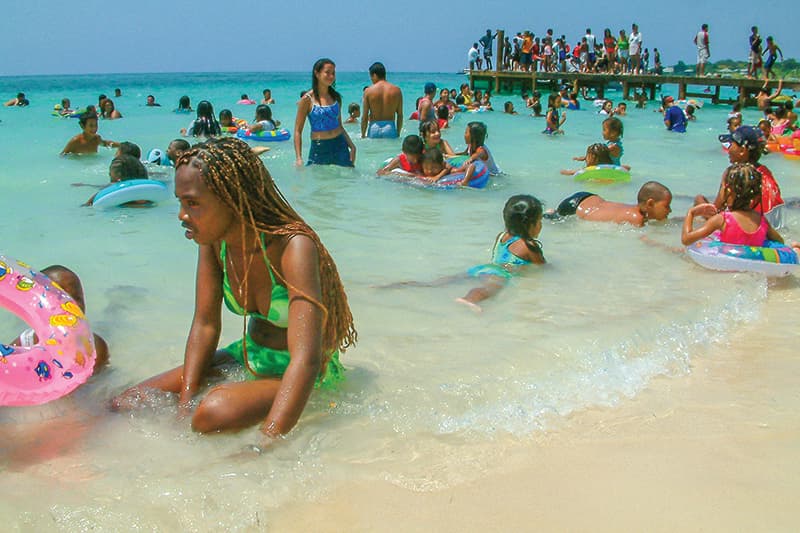
In 2026, around 11 million Hondurans live in the country, and another 900,000 live abroad, primarily in the U.S. and Spain. About 154,000 Catrachos are born each year, and while the Honduran median age has fallen drastically, it still stands at 25. Both Honduras and Roatan have a youthful, energetic population.
Several demographic models project that by 2050, Honduras will have around 17 million people. That population increase, especially in an aging developed world, will give Honduras significantly more clout and geopolitical influence.
With 2.4 children per Catracha, Honduras stands in stark contrast to the collapsing native populations of Europe, the U.S., Japan and South Korea. South Korea now has a birth rate of 0.8 children per woman. The average in Spain is now 1.1 children, and U.S.-born women have an average of 1.7 children. These numbers are well below the replacement level of 2.1 children per woman.
Also the divergence in birth rates dynamics is staggering. An average age of a first time mother in Spain is 32, while in Honduras it is 20. Western World birth rate implosion phenomena created an opportunity for Honduras and Roatan. At the same time the island grew, developed and has become an attractive place to live.
The definition of a “native” Roatan islander has evolved.
Roatan has relied on migrants and immigrants for economic growth and to maintain the skill sets necessary to do so. The proximity to mainland Honduras, with its 11 million people, created coast-to-island migration from departments of Atlántida, Colón and Yoro. The higher-skilled management positions on the island are filled by natives of Tegucigalpa, San Pedro Sula and La Ceiba. That is where the majority of the island’s service-sector managers, doctors and lawyers hail from.
While historically islanders have been looking for job opportunities in the U.S. or at sea since the early 20th century. Many have left the island and settled in the U.S. or worked for banana companies on the mainland. That has changed. Roatan will likely continue demographic trends that have appeared here over the past 25 years and have strengthened in the past five.
Given wage disparities and job opportunities, mainland Hondurans have been moving to Roatan in significant numbers since the 1990s. The boom in the construction sector, tourism and service industries, security companies employing thousands of workers, and even seafood processing plants has attracted mainlanders to Roatan with the prospect of a better economic future.
What Roatan’s population will look like in 2050 is starting to emerge. The growth will continue, or more likely, it will oscillate, much as it has over the past 25 years. Roatan had three periods of stagnation this century: the 2008 U.S. financial crisis, the 2009 Honduran presidential coup and its aftermath, and the 2020-21 COVID-19 lockdowns. It also suffered under some incompetent, corrupt mayors in both Roatan municipalities who made many poor policy decisions and practically brought the island economy to a standstill.
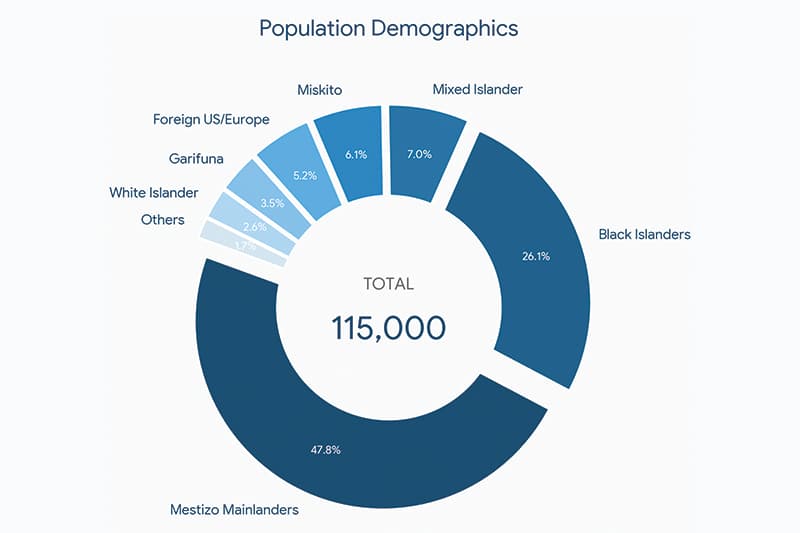
I estimate that around 115,000 people live permanently on Roatan for six months or longer. This estimate is based on observations of RECO peak power demand, overall business trends and population shifts. The estimate is not scientific, but it is meant to be an educated guess. Since the government does not conduct such surveys, and its once-a-decade censuses are tragically inaccurate, I did my best to provide a rough estimate.
The island population will likely continue to grow by around 2.5%, or 2,870 people a year, or eight people a day. That would put Roatan’s population at 190,000 by 2050, assuming growth barely one percentage point above Honduras’ national average of 1.5%. If that percentage rises to a realistic 3%, we are looking at 210,000 people living on Roatan, Santa Helena and Barbareta. By that time, the currently uninhabited island of Morat might even have a few residents.
The ethnic demographic trends will likely continue as they have over the past years. The number and percentage of mestizo mainlanders will continue to grow, and they probably account for about 50,000 to 60,000, or half of the island’s current population.
The Garifuna population, now about 4,000, will grow slightly but lose its percentage share of the island’s total population. The Black, English-speaking islander population, currently about 30,000, will likely continue growing slowly. The White native islander population, now about 3,000, will likely maintain its numbers.
Roatan had three periods of stagnation this century.
The populations moving to Roatan in the greatest numbers are from the Honduran mainland. While Hondurans from all 17 mainland departments live here, some departments and populations are heavily over represented. The population of about 7,000 Miskito Indians living on Roatan, also known as Waikna, will likely double. That is due to two factors: Miskito birth rates of about three to four children per woman, which exceed those of other ethnic groups, and continued migration from Gracias a Dios Department to the island.
The Miskito live in Honduras’ most economically challenged and undeveloped department. They are also hardworking, skillful workers. They work in security, service and construction. They do not expect high living standards, as they come from very basic circumstances on the Miskito Coast. They also help one another and readily offer a place to stay to cousins who come to Roatan looking for work. In fact, the Miskito language on Roatan surpassed the prevalence of the Garifuna language several years ago and is now the third-most widely spoken language on the island.
The foreign population residing on Roatan will likely grow due to migration from the U.S., Canada and, increasingly, Europe. These island residents of European descent currently number around 6,000, but that figure will likely double. Their numbers are growing by a couple hundred each year. As life in many parts of Europe and North America becomes increasingly uncomfortable, and life on Roatan more comfortable, that migration trend should accelerate.
The “retirement” and “adventure” immigrants come here in their 60s. The vast majority of them don’t have children on the island and return to their country of origin in their late 70s and 80s. While many will likely eventually return to their country of origin, Roatan will increasingly offer hospice and home hospital care for those who decide to live out their old age here.
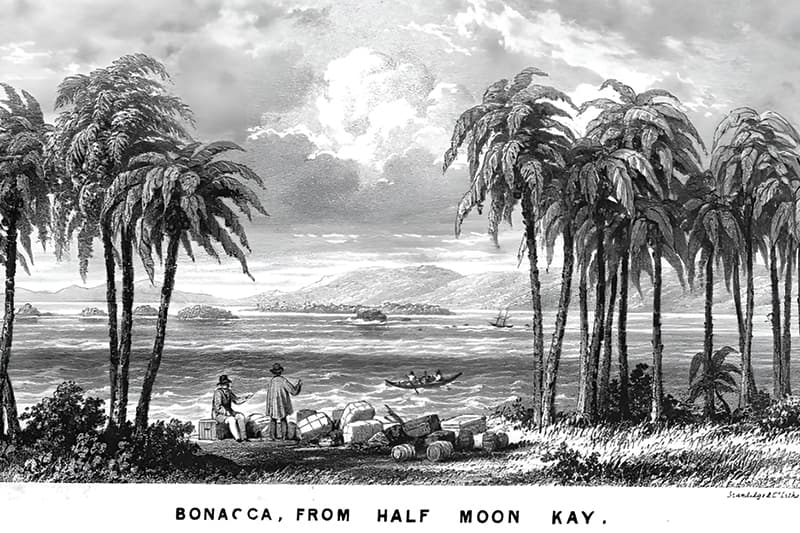
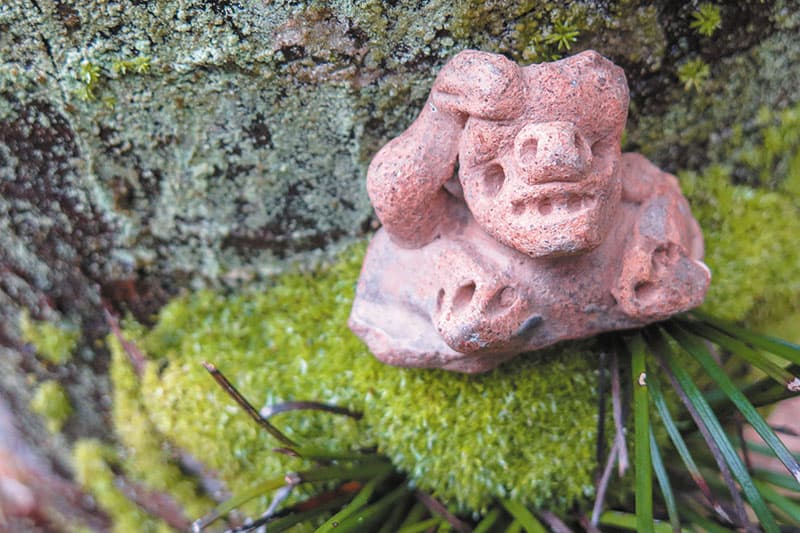
The definition of a “native” Roatan islander has evolved for centuries. From about 1,000 AD to around 1650, native islanders were the Paya Indians. Today, most people living on Roatan do not even know who Paya were.
Then, for about 50 years, from 1797 through the 1840s, the “native” islanders were the Garifuna. From the 1840s to the 1990s, Roatan’s “natives” were island-born White, Black and Garifuna residents. In the 1990s, mestizo migration from the Honduran mainland took off, and by around 2015, “native” islanders had become a minority. One thing that never changes on Roatan is that the island constantly evolves.